Revitalizing Digital Design with Parchment Papers Photoshop Styles
In an era where digital interfaces often lean toward sleek minimalism and flat design, there is a growing counter-movement that values texture, history, and tactile warmth. Designers, marketers, and content creators are increasingly seeking ways to inject personality and depth into their visual communications. This is where Parchment Papers Photoshop Styles become an invaluable asset. These tools bridge the gap between the organic feel of traditional media and the efficiency of modern digital workflows, allowing users to apply authentic, aged textures to their projects with unprecedented ease.
The relevance of these styles extends beyond mere aesthetics. As audiences become more discerning, they respond positively to designs that feel curated and human rather than algorithmically generated. Whether you are a freelance graphic designer working on a brand identity, a blogger creating engaging social media graphics, or an educator designing handouts, the ability to quickly add a layer of sophistication can significantly enhance the perceived value of your work.
The Shift Toward Tactile Digital Aesthetics
For years, the dominant trend in web and graphic design was characterized by clean lines, solid colors, and sans-serif typography. While this approach improved readability and load times, it also led to a certain visual homogeneity. Today, we are witnessing a shift. Users are craving authenticity. They want designs that tell a story, and nothing tells a story quite like the imperfections of paper, ink, and time.
Parchment Papers Photoshop Styles cater directly to this evolving preference. By integrating textures that mimic aged parchment, designers can evoke feelings of nostalgia, authority, and craftsmanship. This is particularly effective for industries such as publishing, luxury goods, heritage brands, and artisanal products. However, the application is not limited to these sectors. Even tech startups are using textured backgrounds to soften their image and appear more approachable.
The evolution of this trend is driven by better screen resolutions and faster internet speeds, which allow for richer visual details without compromising performance. What was once a niche technique reserved for high-end print design is now accessible to anyone with Adobe Creative Cloud. The demand for quick, high-quality texturing solutions has grown, making one-click style sets not just a convenience, but a necessity for efficient creative practices.
Streamlining Workflow with One-Click Solutions
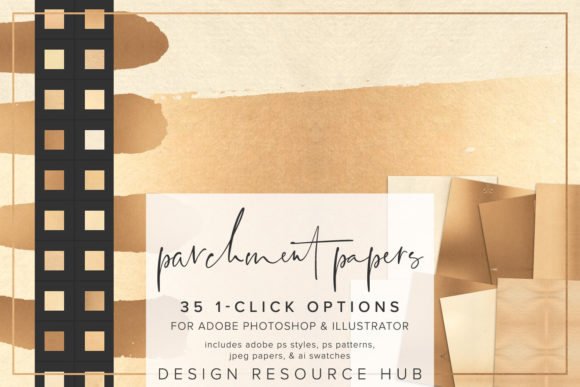
Time is the most scarce resource for modern creators. Manually creating realistic parchment effects from scratch involves complex layering, blending modes, noise filters, and color adjustments. It is a process that can take hours to perfect. Parchment Papers Photoshop Styles eliminate this bottleneck. This set of Adobe Photoshop styles offers one-click options for use with Adobe Photoshop and Adobe Illustrator, two of the most popular applications in the creative industry.
The primary advantage here is consistency and speed. Popular applications of these styles include applying a specific look to fonts in your design, filling shapes with textured patterns, or adding subtle accents to your images. For a marketing team producing daily content, this means maintaining a cohesive brand aesthetic across multiple platforms without reinventing the wheel for every post. For a freelancer, it means delivering high-quality mockups to clients in a fraction of the time.
Moreover, these styles are completely seamless. This technical feature is crucial for scalability. You can use them at any size, on any design element, with ease. Whether you are designing a business card or a large-format banner, the texture will tile perfectly without visible seams. The ability to change the scale of the patterning allows for different applications, ensuring that the texture complements the composition rather than overwhelming it.
Comprehensive Toolkit for Cross-Platform Compatibility
A significant strength of this particular package is its versatility across different Adobe applications. It is not limited to a single file type or program. Understanding what is included helps users maximize the utility of their purchase:
- Adobe Photoshop .pat file: This pattern file allows for extensive customization within Photoshop, enabling users to fill layers with scalable parchment textures.
- Adobe Photoshop .asl file: The layer style file contains pre-configured settings for shadows, bevels, and overlays, providing instant depth and realism.
- Adobe Illustrator .ai swatch file: For vector-based work, this file ensures that textures can be applied to scalable graphics without loss of quality, essential for logo design and print materials.
- JPEG paper files sized at 10 x 10 inches: High-resolution raster images that can be used as backgrounds or masks in any software that supports standard image formats.
This cross-platform compatibility is vital for modern workflows where designers often move between Photoshop for photo editing and Illustrator for vector graphics. Having a unified texture library ensures that the visual language remains consistent regardless of the tool being used.
Practical Installation and Application Techniques
One of the barriers to adopting new digital assets is the perceived complexity of installation. However, these styles are designed for user-friendliness. The installation process is straightforward, ensuring that even those less familiar with Adobe’s deeper functionalities can get started quickly.
To install the .asl file, users simply navigate to the Styles panel in Photoshop, select "Import Styles," and load the file. Similarly, the .pat file is installed via the Patterns panel by selecting "Import Patterns." For Illustrator users, the .ai file is loaded through the Swatches panel by opening the Swatch Library and selecting "Other Library."
Once installed, the creative possibilities expand significantly. You can use the Photoshop styles and Illustrator swatches to apply texture in a single click to shapes, text, borders, and more. But the true magic happens when you combine these styles with other tools. For instance, combining a parchment style with custom brushes can create the effect of handwritten notes on aged paper. Applying the texture to text layers can make headlines look like they were stamped or printed decades ago.
It is recommended to experiment with blending modes and opacity levels after applying the style. While the one-click option provides a strong foundation, slight adjustments can tailor the effect to specific lighting conditions or color palettes. For example, reducing the opacity of a parchment overlay on a photograph can create a vintage dreamlike quality, while increasing contrast can make a document look authentically worn.
Enhancing Brand Storytelling and User Engagement
Beyond the technical aspects, the use of Parchment Papers Photoshop Styles serves a strategic purpose in branding and communication. Texture influences perception. A smooth, glossy surface suggests modernity and precision, while a rough, fibrous texture suggests tradition, reliability, and human touch.
Consider a local coffee shop launching a new loyalty program. Using parchment-styled cards and digital ads can reinforce the idea of artisanal quality and community heritage. Similarly, an author promoting a historical novel can use these textures in social media graphics to immerse potential readers in the book’s atmosphere. In educational contexts, teachers can use these styles to create worksheets that feel less like sterile tests and more like engaging historical documents.
For entrepreneurs and small business owners, these styles offer a cost-effective way to elevate their brand presence. Instead of hiring a specialist for every textured design need, they can maintain a professional look in-house. This democratization of high-end design techniques empowers smaller players to compete visually with larger corporations.
Future-Proofing Your Creative Assets
As technology advances, the line between physical and digital continues to blur. Augmented reality and virtual reality experiences will increasingly rely on realistic textures to create immersive environments. Having a library of high-quality, seamless textures like those found in Parchment Papers Photoshop Styles prepares creators for these future developments. The skills learned in applying these 2D textures translate well to 3D modeling and spatial design.
Furthermore, the timeless nature of parchment ensures that these assets will not become obsolete. Unlike trendy color schemes or font choices that may fall out of favor, the aesthetic of aged paper is classic. It has been used in art and design for centuries and will continue to resonate with audiences who value substance and history.
In conclusion, integrating Parchment Papers Photoshop Styles into your workflow is more than just a stylistic choice; it is a strategic decision to enhance efficiency, authenticity, and engagement. By leveraging these one-click solutions, creators can focus less on technical execution and more on storytelling, ensuring their designs stand out in a crowded digital landscape. Whether you are refining a corporate identity or adding flair to a personal project, these tools provide the perfect blend of tradition and technology.