Garage Instruments: Carpentry & Repair Tools
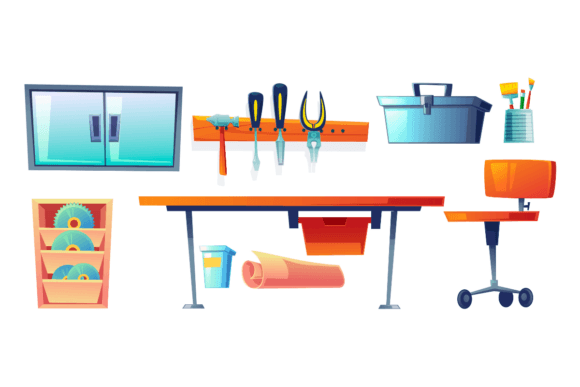
The image of a screwdriver, pliers, and hammer hanging neatly on a board is more than just a decorative choice; it is a visual shorthand for competence, readiness, and the satisfaction of tangible creation. When we look at Garage Instruments, Tools for Carpentry and Repair Works, we are not merely observing hardware. We are looking at the essential extensions of human intent. Whether you are a professional contractor, a DIY enthusiast, or a designer seeking authentic visual metaphors, understanding the narrative behind these tools can transform how you approach your projects.
This cartoon vector illustration, featuring a workbench, a blade for a circular saw, a toolbox, and paint brushes, captures the essence of a well-organized workspace. It serves as a reminder that creativity often requires a foundation of order. For creators, marketers, and educators, this imagery offers a rich vein of inspiration. It speaks to the universal desire to build, fix, and improve our surroundings. By exploring the practical and symbolic weight of these instruments, we can find new ways to communicate value, reliability, and craftsmanship in our own work.
The Visual Language of Readiness
Why does a simple arrangement of hand tools resonate so deeply? In a digital age where much of our work is abstract and ephemeral, physical tools represent concrete results. The screwdriver implies precision and adjustment. The pliers suggest grip and leverage. The hammer denotes force and finality. When these items are depicted hanging on a board, they convey a state of potential energy. They are ready for action.
For marketers and brand strategists, leveraging this visual language can be powerful. Using images of Garage Instruments, Tools for Carpentry and Repair Works in your content signals to your audience that you are grounded and practical. It suggests that you have the means to solve problems. This is particularly effective for businesses in home improvement, education, or consulting, where the promise of a solution is paramount. The cartoon vector style adds a layer of approachability, removing the intimidation factor often associated with heavy machinery or complex repair tasks.
Creative Applications Across Industries
The versatility of this imagery allows it to be adapted for various goals and audiences. Here is how different professionals can interpret and utilize these concepts:
- Content Creators and Bloggers: Use the metaphor of the "toolbox" to discuss skill acquisition. Just as a carpenter needs specific tools for specific joints, a writer needs different rhetorical devices for different arguments. The paint brushes in the illustration can symbolize the finishing touches that turn a rough draft into a polished piece.
- Educators and Trainers: Frame learning modules as "adding tools to your belt." The circular saw blade represents cutting through complexity, while the workbench is the safe space for practice and experimentation. This makes abstract learning objectives feel tangible and achievable.
- Small Business Owners: Showcase your operational efficiency. A photo or illustration of organized tools reflects an organized mind. It tells clients that you respect their time and property, as you are prepared to work cleanly and effectively.
By aligning the visual elements of the illustration with your message, you create a cohesive narrative. The toolbox is not just a container; it is a system. The workbench is not just a table; it is a stage for transformation.
Designing for Clarity and Impact
When incorporating these themes into your own designs or communications, clarity is key. The charm of the vector illustration lies in its simplicity. Each item is distinct and recognizable. Avoid cluttering your message with unnecessary details. Just as a cluttered workbench leads to mistakes, a cluttered design leads to confusion.
Consider the color palette. Traditional tool colors—red handles, steel grays, wooden browns—evoke trust and tradition. However, introducing brighter accents can signal innovation and modernity. If you are targeting a younger demographic of hobbyists, a vibrant, flat-design approach might be more engaging than a realistic depiction. The goal is to maintain the recognizability of the Garage Instruments, Tools for Carpentry and Repair Works while adapting the style to fit your brand’s voice.
Consistency is another crucial factor. If you use the motif of hanging tools in one part of your campaign, carry that theme through. Use similar icons for navigation, or structure your service offerings as "tools" in a kit. This creates a memorable user experience that feels intentional and well-crafted.
Practical Inspiration for Your Next Project
How can you apply this inspiration today? Start by auditing your own "toolkit." What are the core instruments you use to deliver value? Are they organized and accessible, or scattered and dull? Sometimes, the most productive thing you can do is sharpen your existing resources rather than acquiring new ones.
For those looking to create content around this topic, consider these angles:
- The Psychology of Organization: Discuss how a tidy workspace influences mental clarity and productivity. Reference the visual calm of the hanging tools as a starting point.
- Essential vs. Nice-to-Have: Break down the difference between the hammer (essential) and the specialized circular saw blade (niche). Apply this to business strategies or personal habits.
- The Art of Maintenance: Just as tools need cleaning and oiling, skills and relationships need regular attention. Use the paint brushes as a metaphor for refreshing old projects.
These topics are evergreen because they address fundamental human needs for order, capability, and creation. They resonate with anyone who has ever tried to fix a leaky faucet or build a bookshelf.
Balancing Function and Aesthetics
It is important to remember that tools are first and foremost functional. Their beauty lies in their utility. When we appreciate Garage Instruments, Tools for Carpentry and Repair Works, we are appreciating engineering that serves a purpose. This principle should guide your creative output. Ensure that every element you include serves a function for your audience. Does it inform? Does it inspire? Does it simplify?
Avoid the trap of using industrial aesthetics purely for trendiness. If you are not in a related field, ensure the metaphor holds up. A software developer might use the "toolbox" analogy, but it must be clear how code relates to carpentry. The connection should feel natural, not forced. Authenticity builds trust, and trust is the currency of effective communication.
In conclusion, the image of screwdrivers, pliers, and hammers on a board is a potent symbol. It invites us to roll up our sleeves and engage with the world physically and creatively. By understanding the deeper meanings behind these objects, we can enrich our storytelling, refine our branding, and inspire others to take action. Whether you are designing a website, writing a blog post, or planning a workshop, let the spirit of the well-equipped garage guide you toward clarity, precision, and lasting impact.