Building the Ideal Creative Sanctuary: A Guide to Professional Art Studio Design
The environment in which an artist works is far more than a simple backdrop; it is an active participant in the creative process. Whether you are a seasoned painter, a digital illustrator, or a sculptor, the layout and equipment of your workspace can significantly influence your productivity, health, and artistic output. Designing a Art Studio. Professional Artists Design requires a thoughtful blend of aesthetic inspiration and rigorous functionality. It is not merely about filling a room with supplies but curating a space that supports the physical and mental demands of creation.
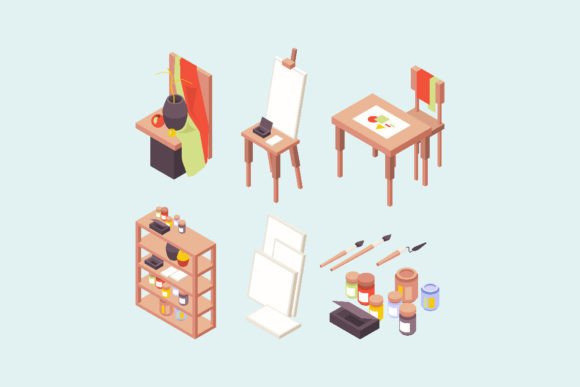
When visualizing the perfect workspace, many creators turn to isometric illustrations to plan their layouts. These vector-based diagrams allow for a clear understanding of spatial relationships between key elements like easels, podiums, and storage units. By mapping out your studio before moving a single piece of furniture, you ensure that every inch serves a purpose. This strategic approach transforms a chaotic collection of tools into a streamlined engine for creativity.
The Foundation: Lighting and Ergonomics
Before selecting brushes or paints, one must address the invisible yet critical infrastructure of the studio: light and posture. Natural light remains the gold standard for color accuracy. North-facing windows provide consistent, diffused illumination that does not shift dramatically throughout the day, preventing the frustration of colors looking different under morning sun versus evening lamps. However, relying solely on natural light is impractical. A professional setup integrates high-CRI (Color Rendering Index) LED panels that mimic daylight temperature, ensuring that your work looks true regardless of the time.
Ergonomics is equally vital. Long hours spent hunched over a canvas or tablet can lead to chronic pain, effectively ending a career prematurely. An adjustable easel is not a luxury; it is a necessity. It allows you to work at eye level, reducing strain on the neck and shoulders. Similarly, the choice of seating should prioritize lumbar support. Many modern studios incorporate standing desks or adjustable podiums for mixed-media work, allowing artists to shift positions frequently. This dynamic approach to posture keeps energy levels high and prevents the stagnation that often accompanies sedentary work.
Organizing the Toolkit: From Brushes to Digital Assets
A cluttered space leads to a cluttered mind. In a Art Studio. Professional Artists Design, organization systems must be intuitive and accessible. Consider the workflow of a typical painting session. You need immediate access to primary brushes, mixing palettes, and water containers. Secondary tools, such as specialty sponges or palette knives, can be stored slightly further away. Rarely used items should be archived in closed cabinets to maintain visual calm.
- Vertical Storage: Utilize wall-mounted racks for drying canvases and storing large paper rolls. This frees up floor space for movement.
- Modular Shelving: Use adjustable shelves that can accommodate varying sizes of paint tubes, jars, and sketchbooks.
- Mobile Carts: A rolling utility cart allows you to bring essential supplies to any corner of the studio, adapting to large-scale projects that require mobility.
For those integrating digital tools, cable management becomes part of the organizational strategy. Tangled wires are not only unsightly but hazardous. Using velcro ties and under-desk trays keeps the workspace clean and safe. Furthermore, the transition between traditional and digital media is seamless in a well-designed studio. A dedicated digitization station, equipped with a high-resolution scanner or camera mount, allows artists to archive physical work immediately, bridging the gap between tactile creation and digital distribution.
The Role of Isometric Planning in Studio Layout
Why do so many interior designers and artists rely on isometric views when planning their studios? The answer lies in clarity. Unlike traditional floor plans, which can be abstract, isometric illustrations provide a three-dimensional perspective that helps visualize volume and depth. When you download a ZIP folder containing EPS vector files for studio planning, you gain the ability to manipulate these elements precisely.
These vector assets typically include scalable icons of easels, chairs, storage units, and lighting fixtures. Because they are vector-based, they can be resized without losing quality, allowing for precise fitting into your specific room dimensions. You can experiment with different configurations: placing the easel near the window versus against the wall, or positioning the storage unit to act as a room divider. This digital prototyping saves time and money by preventing costly mistakes in furniture placement.
Moreover, using pre-made vector illustrations of Professional artists designers creators items easels brushes paints podium working place vector isometric elements accelerates the design process. Instead of drawing each item from scratch, you can drag and drop components to test various layouts. This method is particularly useful for small spaces where every centimeter counts. It allows you to see if there is enough clearance to walk around a large canvas or if a podium will block a crucial power outlet.
Material Selection and Atmosphere
The materials used in your studio contribute to its overall atmosphere and durability. Floors should be easy to clean and resistant to stains. Polished concrete, vinyl, or sealed wood are popular choices because they withstand spills of acrylics, oils, and solvents. Walls benefit from washable paint in neutral tones. While vibrant walls might seem inspiring, they can interfere with color perception. A soft gray or white background ensures that your eyes remain focused on the hues of your artwork rather than the surroundings.
Ventilation is another non-negotiable aspect of material selection. Oil paints, turpentine, and fixatives emit fumes that can be harmful over long periods. Installing an air purification system or ensuring adequate cross-ventilation is essential for health. Some artists incorporate plants into their studio design not just for aesthetics but for their air-purifying qualities. Snake plants and spider trees are resilient options that thrive in varied lighting conditions and help maintain air quality.
Adapting to Modern Creative Workflows
The modern artist is often a hybrid creator, blending traditional techniques with digital marketing and online sales. Therefore, the studio must accommodate these diverse activities. A small corner dedicated to photography or videography allows for the documentation of the creative process, which is crucial for social media engagement. Good lighting and a clean background make this task easier and more professional.
Additionally, the rise of remote collaboration means that many artists participate in virtual critiques or teach online classes. A quiet zone with sound-dampening materials can serve as a recording booth or a space for focused video calls. This separation of "loud" creative work and "quiet" administrative tasks helps maintain boundaries and improves professional presentation.
When considering the acquisition of design assets for planning, look for comprehensive packages. A typical ZIP folder might include not just the isometric vectors but also texture maps and color palettes that match industry-standard software. This integration ensures that your digital planning aligns with your real-world execution. The flexibility of EPS files means they can be imported into various design programs, from Adobe Illustrator to CAD software, providing versatility for users with different technical skills.
Investing in Longevity and Inspiration
Ultimately, a professional art studio is an investment in your career. It is a place where ideas take form and where skills are honed. By prioritizing ergonomic furniture, efficient storage, and proper lighting, you create an environment that sustains your practice over decades. The use of planning tools like isometric vectors simplifies the complex task of spatial design, allowing you to focus on what truly matters: the art itself.
Remember that a studio is never truly finished. It evolves as your practice grows. Start with the essentials—a sturdy easel, good light, and a comfortable chair—and build outward. Allow the space to breathe and adapt. Whether you are working with broad strokes on a large canvas or intricate details on a digital tablet, your environment should empower you to push boundaries. Embrace the process of designing your Art Studio. Professional Artists Design with the same care and attention you give to your masterpieces. The result will be a sanctuary that not only houses your tools but also nurtures your creative spirit.